
Epic African Historical and Mythological Heroes and Legendary Warriors
Explore the legendary warriors and rulers of Africa, including Sundiata Keita, Queen Amina, and more. Discover their heroic tales, battles, and lasting legacies that shaped empires and continue to inspire today.
Chinenye Egbuna Ikwuemesi
2/6/20253 min read
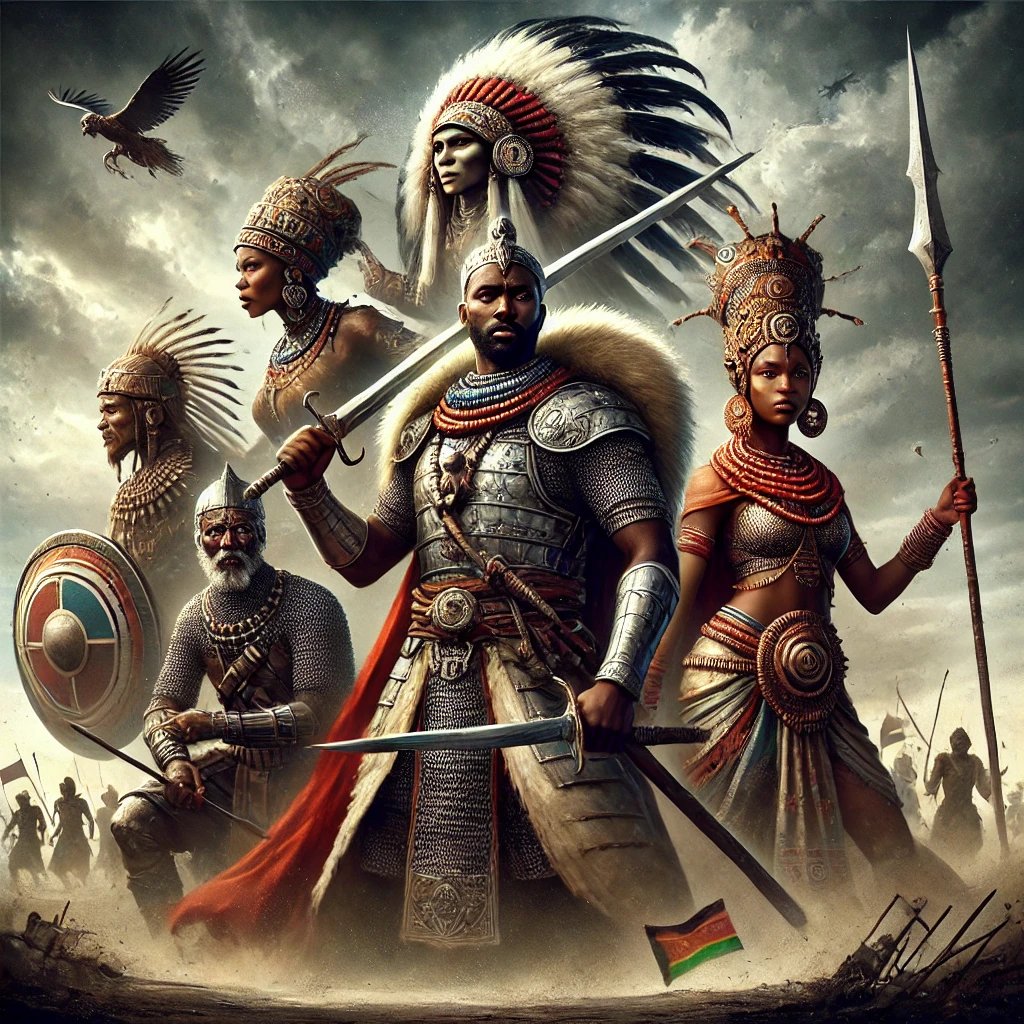
Africa’s Greatest Mythological Heroes
The heroes of African mythology are not waiting to be compared to Hercules. They do not need that permission.
What they need is to be read on their own terms, within the cosmological and civilisational logic that produced them. Because when you do that, what you find is not a set of figures that rival European heroes. You find a fundamentally different understanding of what heroism is for.
In many African traditions, the hero does not rise for personal glory. The hero rises for the people, the kingdom, the cosmic order. Strength in isolation is not celebrated. Strength in service is. That distinction matters, and it runs through every figure explored here.
Luanda Magere
Among the Luo people of Kenya, Luanda Magere was a warrior of such invincibility that conventional weapons could not touch him. His body was stone. Arrows, spears, and swords made no impression. His enemies, the Nandi, could not defeat him by force and so resorted to deception, sending a woman as a spy to discover his vulnerability. His shadow, unlike his body, was flesh. A spear through the shadow brought him down. He turned to stone where he fell.
In Kenya's Kano plains, a rock is said to be his petrified body still. The story does not end with his defeat. It ends with his permanence.
Mwindo
Mwindo of the Nyanga people of the Congo was born walking, talking, and wielding magical power. His father, fearing what his son would become, tried to kill him at birth. He survived. He survived duels with gods, descent into the underworld, and assassination attempts that would have ended lesser figures. When he finally came into his power, he did not use it for revenge. He forgave his enemies and ruled wisely.
That is the point of the story. Not the supernatural feats. The wisdom that came after them.
Queen Amina of Zazzau
Queen Amina of Zazzau, in what is now Zaria in northern Nigeria, led armies into battle for more than thirty years. She expanded her empire beyond its existing borders through military strategy and personal command. She built fortifications around every city she conquered. Many of those walls, known as Amina's Walls, still stand. She refused marriage because she understood that rulership was her purpose and that marriage, in the political context of her time, would have complicated it.
She is not a legend dressed up as history. She is history.
Bayajidda
Bayajidda arrived in the city of Daura to find a giant serpent controlling the well, the source of the city's water and therefore its life. He killed it with a single strike. The queen married him. Their children founded the Hausa city-states of Nigeria and Niger. He is not only a hero. He is a founding figure of an entire civilisational lineage.
Sundiata Keita
Sundiata Keita was born with a condition that prevented him from walking. He was mocked, marginalised, and eventually exiled. He trained in exile, returned as a warrior, defeated the sorcerer Soumaoro Kante at the Battle of Kirina, and founded the Mali Empire. His nephew Mansa Musa became one of the wealthiest individuals in recorded history.
Sundiata's story is about what happens when the people who were written off refuse to accept that verdict.
Oba Ewuare the Great
Oba Ewuare expanded the Benin Empire through military strategy and what his people understood as supernatural authority. He rebuilt Benin City, introduced major innovations in urban planning, and oversaw the bronze artistry that would eventually astonish European visitors who could not reconcile what they were seeing with what they believed about Africa. He commissioned the Walls of Benin, the largest earthwork system in human history before the mechanical era.
To the Edo people he remains one of the great figures of their civilisational memory. That is the only comparison that matters.
Anansi
Anansi of the Akan people of Ghana is not a warrior. He is a trickster, and that is a different kind of power entirely. He wins through wit, through language, through the ability to reframe any situation to his advantage. His stories travelled from West Africa to the Caribbean and the Americas, where they took new names and new forms but kept the same essential logic. Cleverness as survival. Words as weapons. The mind as the ultimate instrument of power.
Anansi is one of the most widely distributed mythological figures in the world. He got there without a sword.
These figures are not Africa's answer to European mythology. They are Africa's own record of what it valued, what it feared, what it celebrated, and what it understood heroism to mean. That record is extensive, specific, and serious.
It has always been here. It has simply not always been listened to.