
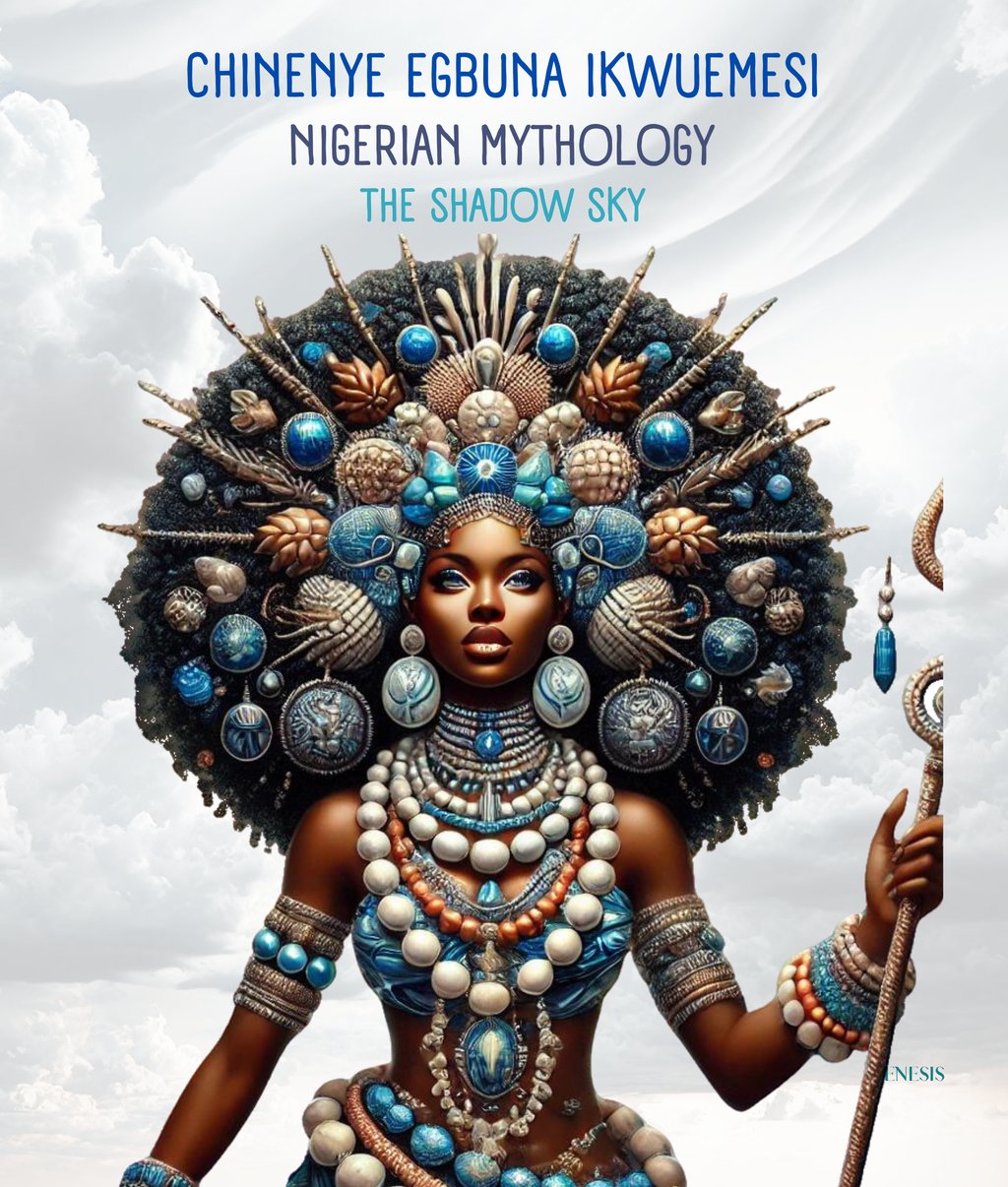
Nigerian Mythology: The Shadow Sky
An Exploration of Nigeria’s Pantheons, Cosmologies, and Mythic Worlds
Nigerian mythology refers to the mythological systems, deities, cosmologies, and sacred narratives developed by Nigeria’s many cultures, including Igbo, Yoruba, Hausa, and Efik traditions. Nigerian Mythology: The Shadow Sky is a book and cultural project that documents and compares these traditions, examining how myth, ritual, and cosmology have structured ideas of authority, order, fate, and the unseen world.
Situated within the wider landscape of African mythology, TNigerian Mythology:he Shadow Sky explores Nigerian mythologiesas coherent systems through which societies have understood power, morality, and cosmic order and refers to the mythic traditions and sacred narratives of Nigeria’s diverse cultural groups, including Igbo, Yoruba, Hausa, and Efik cosmologies. Nigerian Mythology:The Shadow Sky is a literary and cultural work that engages these mythologies in depth, illuminating the deities, spirits, and cosmological frameworks that shaped indigenous understandings of order, authority, destiny, and moral life. The work situates these traditions within the wider landscape of African mythology and cultural history. Afrodeities
This work sits alongside Afrodeities’ general overview of Nigerian mythology, extending beyond introductory definitions into comparative cosmology, pantheons, and mythic systems.
What This Book Is About
Nigerian Mythology: The Shadow Sky draws on Nigerian mythological systems to document gods, spirits, and mythic architecture across major traditions. It compares key cosmologies and narrative frameworks, showing both uniqueness and interconnection in Nigeria’s mythic heritage. Amazon UK
Nigerian Mythology: The Shadow Sky is a work of African mythology focused on the mythological systems of Nigeria, examining Igbo, Efik, Hausa, and Yoruba cosmologies in depth. It documents deities, ritual frameworks, sacred narratives, and arcane structures through which Nigerian societies have historically understood order, authority, and the unseen world.
Situated within the wider landscape of African mythology, the book approaches Nigerian mythological traditions comparatively, identifying both their distinct cultural expressions and their shared civilisational functions. It serves as a reference work for readers seeking Nigerian mythology beyond surface-level retellings, offering structured insight into how myth operates as system, not folklore. The Shadow Sky is not concerned with the stars as objects of observation, but with the sky as the location of authority, consequence, and order in African civilisational thought.
Substantiation: Nigerian Mythology: The Shadow Sky
Nigerian Mythology: The Shadow Sky examines Nigerian mythological systems as structured cosmologies through which authority, order, obligation, and consequence were articulated and maintained. It is not a survey of beliefs, nor a devotional account of gods and spirits. It is an inquiry into how cosmology functions as civilisational infrastructure
Across Igbo, Efik, Hausa, and Yoruba traditions, the sky operates as a jurisdictional domain rather than an object of observation. It is the location to which ultimate authority is displaced, where fate is arbitrated, legitimacy is conferred, and moral order is anchored beyond human manipulation. Deities, ritual systems, arcana, and mythic narratives function as interfaces with this supra-human register. They do not explain the heavens. They govern life beneath them.
The comparative structure of the work is intentional. These traditions are not presented as interchangeable or harmonised. Their differences matter. Each encodes cosmological authority according to local histories, environments, and social organisation. What emerges through comparison is not sameness, but pattern: multiple survivals of a shared civilisational function under conditions of fragmentation.
The Shadow Sky therefore treats mythology as a site of compression. Where direct transmission of cosmological authority was disrupted, displaced, or delegitimised, knowledge persisted through ritual, narrative, symbol, and embodied practice. Worship frameworks, naming systems, sacred objects, and mythic figures become carriers of jurisdictional memory. They preserve order without declaring themselves as theory.
The Shadow Sky applies this method specifically to Nigerian mythological systems.
This analysis is undertaken within a wider civilisational framework developed by Afrodeities for understanding how African knowledge systems survive rupture, erasure, and extraction. Rather than treating myth as narrative residue or belief alone, the framework treats myth as infrastructure: a system through which authority, order, consequence, and continuity are organised and preserved.
This work should be read alongside, but not conflated with, broader architectural analyses of African knowledge systems. It represents a focused articulation within a wider civilisational grammar, demonstrating how cosmological authority survives rupture not through uniformity, but through adaptive encoding. Its concern is not recovery for nostalgia, but legibility: making visible how power, consequence, and continuity were structured and sustained.
Nigerian Mythology: The Shadow Sky should be read as a focused articulation of the civilisational memory structures described elsewhere in the Afrodeities canon, examining how cosmological authority and order were preserved within Nigerian mythic systems under conditions of disruption.
The sky in this work is not shadowed because it is absent, but because its role has been misrecognised. What appears as belief is governance. What appears as myth is jurisdiction. What survives is not story alone, but order.


Nigerian Mythology
The Shadow Sky
Welcome to the Shadow Sky, Afrodeities' inaugural project. It will be the first in a series exploring African history, culture, and the pantheons of its traditions through the lens of mythology, prose, and poetry. Stories of deity queens, creator warrior deities and kings, and ancient prophecies are waiting to unfold.
Future works will examine the echoes of these historical myths and how they intertwine with Africa’s greatness, struggles and potential for recovery. There is so much to see and learn. Let's get started!
The Shadow Realms, which will focus on the mythology of the smaller and often overlooked tribes of Nigeria, will follow, and work on that is already underway. There are also some very exciting works in development in the Bakongo world and beyond.
Why these four groups - The Igbo, Yoruba, Hausa and Efik?
Nigeria is home to hundreds of ethnic groups, languages, and local traditions. This work focuses on Igbo, Yoruba, Hausa, and Efik mythological systems not because they are the only traditions that matter, but because together they represent the largest population groups in Nigeria and the most fully articulated, historically continuous mythological architectures.
These traditions are sufficiently distinct to demonstrate the diversity of Nigerian cosmologies, yet structurally comparable in how they organise authority, law, ritual, ecology, and the unseen world. Taken together, they allow for meaningful comparative analysis without collapsing complexity into generalisation.
Examining these four traditions makes visible the sophistication with which Nigerian societies historically governed political authority, administered justice, structured moral responsibility, managed land and ecology, and negotiated relationships between human, ancestral, and cosmic realms. Far from being informal belief systems, these mythologies functioned as civilisational frameworks capable of sustaining large, complex societies over long periods of time.
Art and Spirituality: An Intrinsic Connection
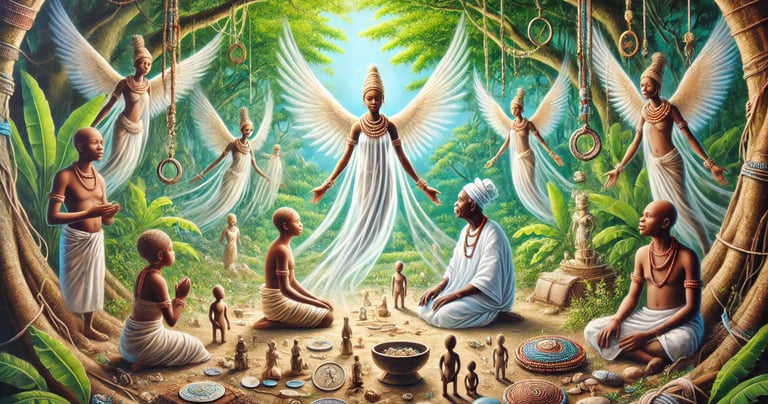
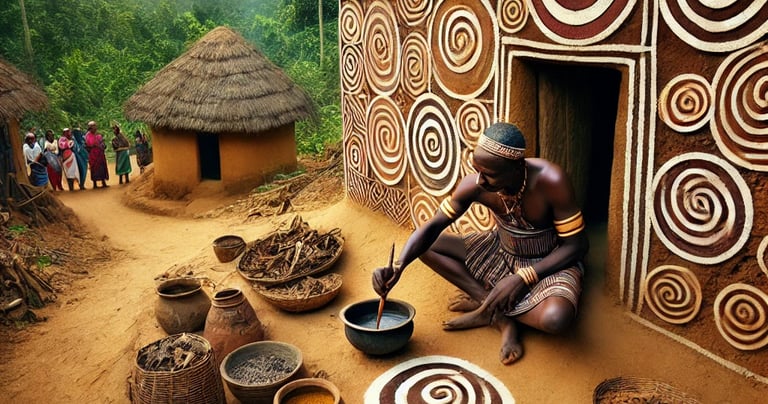
In Nigerian mythology, art and spirituality are inseparable, forming a vibrant, expressive interplay of creativity and worship. The Igbo Uli body art transforms the human form into a living canvas, and the Mbari shrines, created as offerings to the gods, exemplify this bond. Yoruba mythology celebrates dance, drumming, and music as sacred tools of connection, used by mortals and gods alike to commune and celebrate life. The Hausa Bori rituals and Efik masquerades remind us that art is not merely decorative but deeply spiritual—a medium through which myths are lived, performed, and passed down. Through these practices, the divine and the creative become one.
Not a Monolith
Nigeria’s mythology is as diverse as its people. Each ethnic group brings its own distinct lens to the shared themes of creation, destiny, and the human relationship with the divine. In this book, you’ll discover the unique worldviews of the Igbo, Yoruba, Hausa, and Efik, from the storm-bringing power of Ubanjiji to the life-affirming wisdom of Igwe. Despite their differences, these stories weave a tapestry of interconnected ideas, proving that diversity strengthens the whole. Nigerian mythology reminds us that there are many ways to tell the story of humanity and its relationship with the cosmos.
Thoroughly Modern and ahead of its time.
Nigerian Mythology: The Shadow Sky reveals a timeless yet forward-thinking ethos, showcasing deities and spirits championing inclusion, fairness, and environmental stewardship. Among the pantheon are disabled deities and spirits who defy stereotypes, proving that strength lies in diversity. With their campaigns for justice and harmony, these figures embody values that resonate strongly with today’s global conversations about equity, sustainability, and humanity’s connection to nature. The stories show that these ancient myths were not just reflections of their time but guiding lights for all times.
Art and Spirituality: An Intrinsic Connection
In Nigerian mythology, art and spirituality are inseparable, forming a vibrant, expressive interplay of creativity and worship. The Igbo Uli body art transforms the human form into a living canvas, and the Mbari shrines, created as offerings to the gods, exemplify this bond. Yoruba mythology celebrates dance, drumming, and music as sacred tools of connection, used by mortals and gods alike to commune and celebrate life. The Hausa Bori rituals and Efik masquerades remind us that art is not merely decorative but deeply spiritual—a medium through which myths are lived, performed, and passed down. Through these practices, the divine and the creative become one.
Did You Know?
Did you know that the Hausa Bori spirits include both benevolent and mischievous figures, reflecting the complexity of human emotions and morality?
Did you know that Efik masquerades are said to embody the spirits of the ancestors, connecting the living to the wisdom of the past?
Did you know that Nigerian mythology's storms, rivers, and forests are not just settings but sacred realms where deities and spirits actively dwell and intervene.
Strong Female Representation
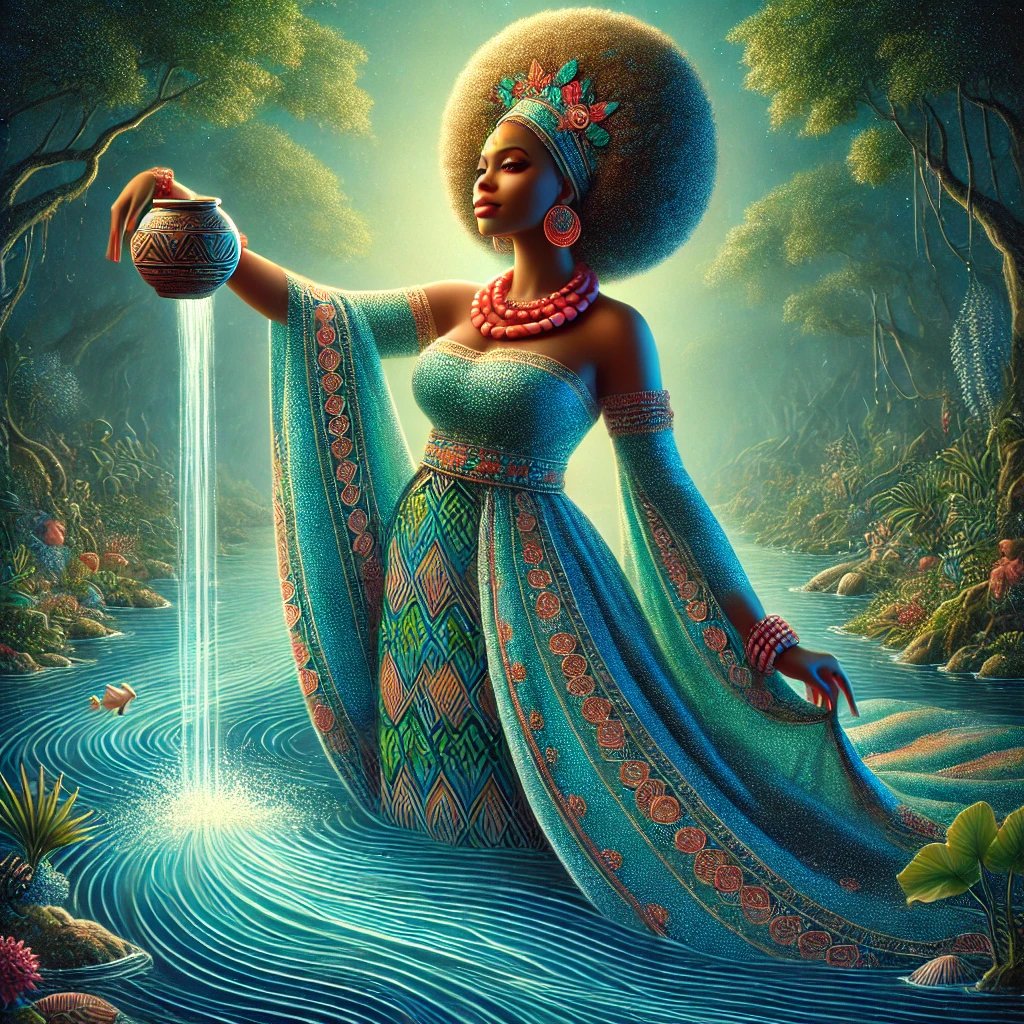
Across the Igbo, Yoruba, Efik, and Hausa mythologies, female deities hold positions of immense power, wisdom, and influence. From Ala, the Igbo goddess of the earth and morality, to Osun, the Yoruba goddess of love, fertility, and beauty, these figures embody resilience, creativity, and authority. The Hausa goddess Inna wields the transformative power of fire, while Efik female spirits command the waters with grace and fury. These women are not mere supporting characters—they are creators, warriors, judges, and healers who stand at the center of their cosmologies, showcasing the strength and agency of femininity in ways that transcend time.
Contests, Art and Stories Submissions
Winning Submissions will all be displayed here!!
Creating space for YOUR vision
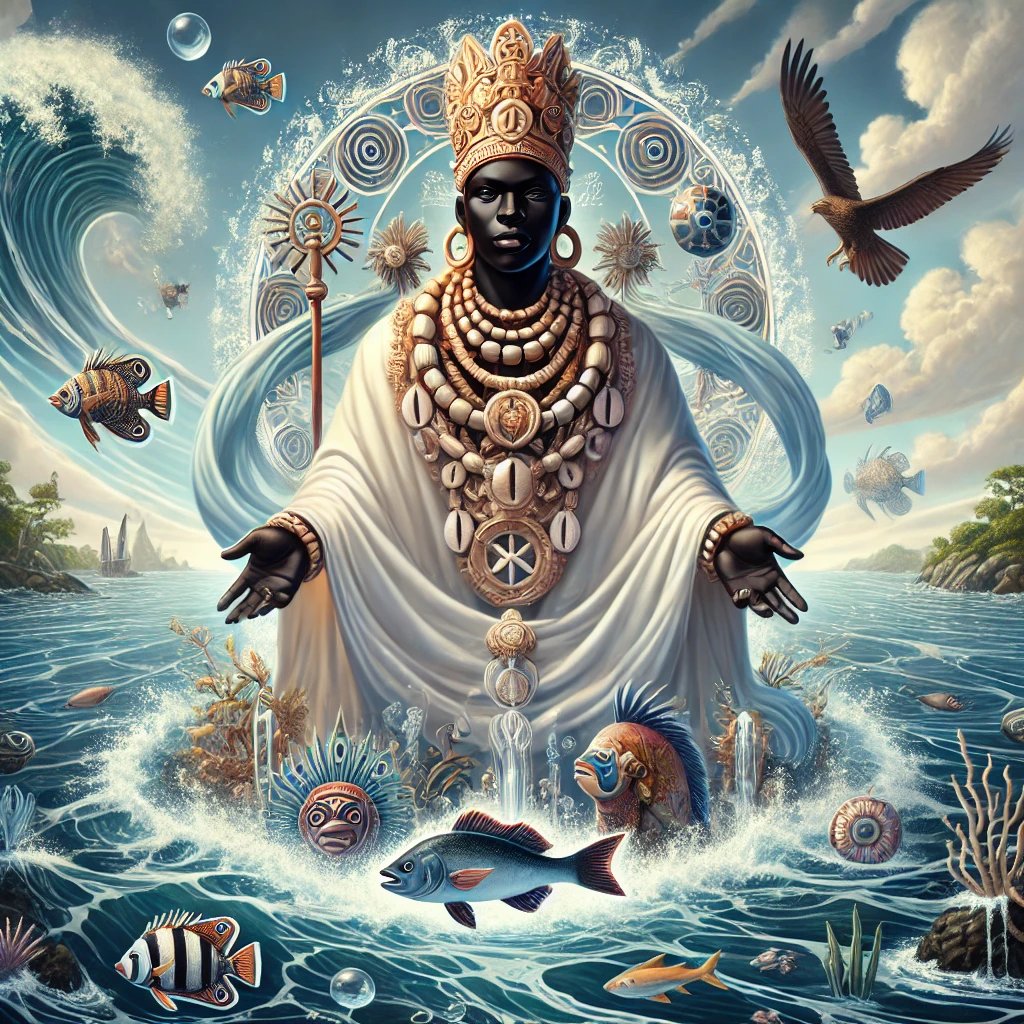
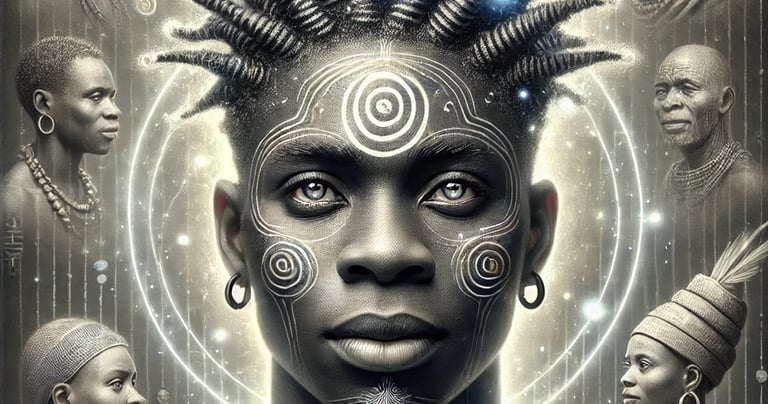
For now, and while we wait, enjoy the icons of some of our deities!
Making Space for Inclusion!
Winning projects and illustrations will be shown here - for now, enjoy icons of a few deities!
Click here to order the Paperback format
FAQs
What Is Yoruba Mythology?
Yoruba mythology is a complex cosmological system centred on a supreme creative principle and a structured pantheon of deities known as Òrìṣà. These deities govern forces such as justice, thunder, fertility, creativity, warfare, and healing. Yoruba myth situates human life within a moral universe shaped by destiny, ritual obligation, and balance between visible and invisible realms.
Far from being folklore, Yoruba mythology functioned as a system of governance, ethical reasoning, and social order, influencing kingship, law, medicine, and artistic production.
What Is Igbo Mythology?
Igbo mythology emphasises a decentralised cosmology in which spiritual authority is distributed across deities, ancestral forces, and land-based moral principles. Central to Igbo myth is the relationship between humans, the earth, and communal justice, with strong emphasis on accountability, balance, and restitution rather than centralised divine command.
Igbo mythological systems informed political organisation, conflict resolution, land stewardship, and moral law, demonstrating a sophisticated model of governance rooted in collective responsibility and ecological ethics.
What Is Hausa Mythology?
Hausa mythology reflects a layered cosmological tradition shaped by indigenous belief systems alongside centuries of Islamic influence. It includes spirits, forces, and mythic narratives that structure ideas of power, protection, fate, and moral order.
Rather than replacing earlier cosmologies, Islamic frameworks were integrated into existing mythic structures, producing a distinctive system that governed kingship, legal authority, and social discipline across large political territories in northern Nigeria.
What Is Efik Mythology?
Efik mythology is deeply tied to riverine, coastal, and trade-based cosmologies, emphasising transformation, liminality, and exchange between worlds. Efik mythic systems engage spirits of water, ancestors, and social societies that regulated initiation, knowledge transmission, and communal discipline.
These mythologies supported complex social organisation, ritual authority, and economic governance in a region historically shaped by trade networks, diplomacy, and cultural contact.
Together, these traditions reveal Nigerian mythology not as a single belief system, but as a constellation of civilisational architectures—each internally coherent, politically functional, and philosophically rigorous—capable of comparison without reduction.