
African Cosmology Systems
How Africans Structured and Understood Reality
African Cosmology Systems
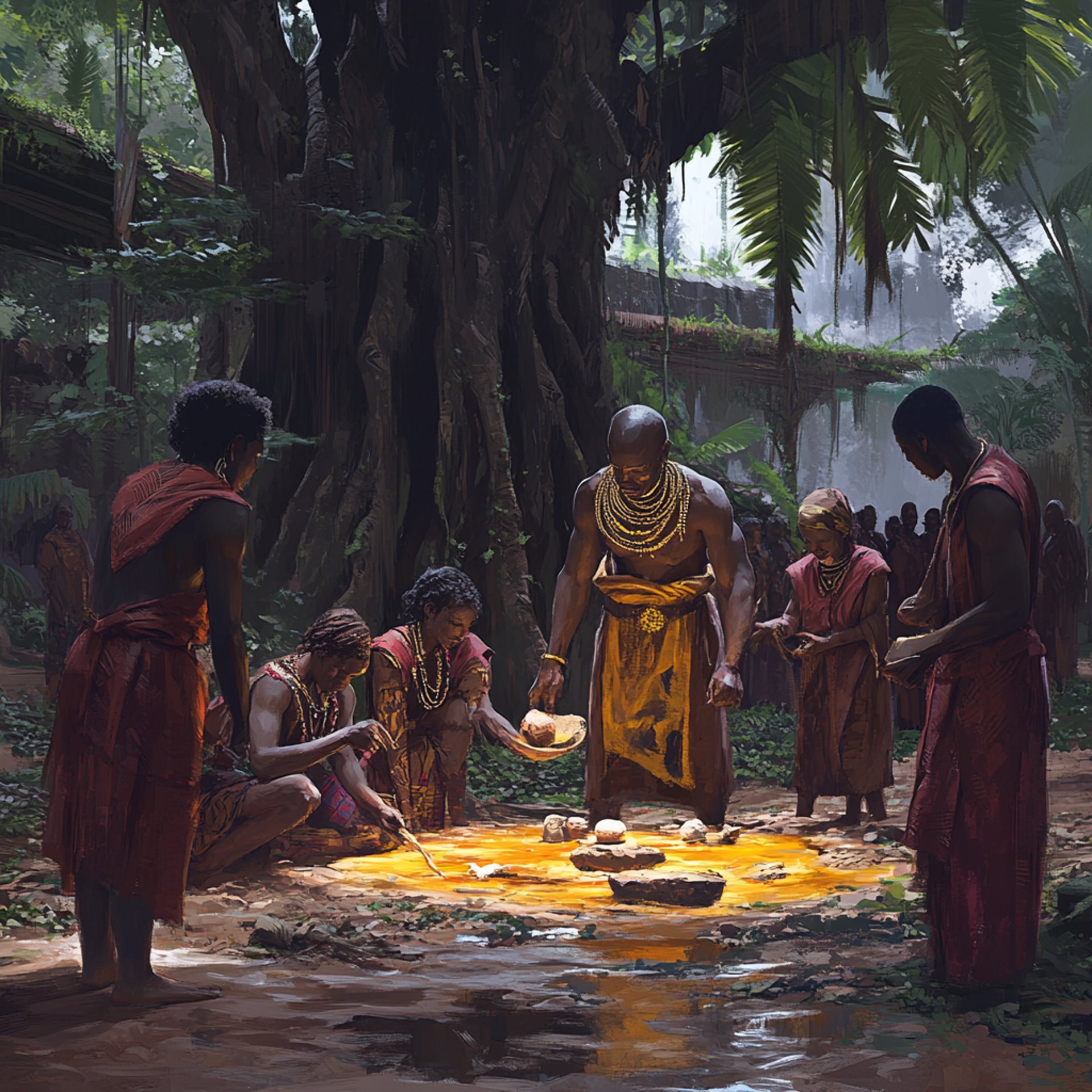
African cosmology is not merely a collection of spiritual beliefs. It is the structural understanding through which African civilisations organised reality itself. Across the continent, cosmology determined how authority was legitimised, how land was governed, how illness was interpreted, how time was measured, and how the living related to both the ancestral and the unborn. These systems were not abstract philosophy. They were operational frameworks embedded into daily governance and social order.
To understand African mythology fully as a knowledge architecture rather than a storytelling tradition, see the central interpretive overview in African Mythology: Not Stories. Infrastructure.
Cosmology as Structural Governance
In many African civilisations, cosmology defined the limits of political power. A ruler governed only while maintaining balance between land, people, ancestors, and moral order. This equilibrium could be expressed through principles such as Ma’at in the Nile Valley, through ancestral accountability in Central African systems, or through the relational moral frameworks embedded in southern communal philosophy. Political authority was therefore inseparable from cosmic stability. Governance was not simply administrative. It was cosmological maintenance.
The Layered Universe
African cosmological models frequently describe existence as layered rather than divided. The visible world, the ancestral realm, the unborn, and the spiritual forces inhabiting land and water were understood as interacting continuously rather than existing in isolation. This layered ontology allowed communities to interpret drought, illness, prosperity, and conflict not as random events but as indicators of imbalance requiring restoration. Ritual, law, diplomacy, and healing all functioned as mechanisms for re-establishing equilibrium.
Time as Cyclical Continuity
Unlike linear imperial chronologies that treat time as irreversible progression, many African cosmologies frame time as cyclical continuity. Past, present, and future remain in dialogue through ancestry, naming, seasonal cycles, and ritual recurrence. This cyclical conception stabilised societies during periods of rupture because historical continuity could be reconstructed through repetition even when written archives were destroyed.
Cosmology as Survival Technology
The endurance of African cosmology across enslavement, colonialism, linguistic suppression, and forced conversion demonstrates its structural resilience. Because cosmological knowledge was embedded in ritual practice, naming systems, kinship structures, and agricultural rhythms, it could travel without books or institutions. Cosmology therefore functioned as portable civilisational infrastructure rather than static religious doctrine.
For the wider framework explaining how these systems encoded governance, science, and social continuity, return to African Mythology: Not Stories. Infrastructure.
Get in Touch
We'd love to hear from you! Reach out with your thoughts, questions, or stories related to Africa’s rich mythology and history.